
A Day in the Life of a Catnip Cottage Cat
The average Catnip Cottage cat begins the day with the confidence of a small monarch and the schedule of a furry celebrity. There are meals to inspect, pillows to test, humans to supervise, and guests to charm. There are also, naturally, several naps of great importance.
From the outside, it may look like an easy life. Stretch, snack, nap, repeat. But any cat who lives at Catnip Cottage knows the truth. Keeping a cottage full of people entertained is serious work.
Every day has its rhythm. The humans arrive. The food bowls fill. The toys migrate mysteriously across the room. The beds get fluffed, unfluffed, overturned, and claimed. By morning, every cat looks innocent.
Suspiciously innocent.

Morning begins with the cleaning crew
The first sound of the day is not an alarm clock. It is the door.
To the cats, this means the morning crew has arrived. Cleaners, food providers, water-bowl refreshers, blanket fluffers, litter box magicians, and general servants to the feline kingdom. The cats may pretend this arrival is no big deal, but everyone knows better.
One cat trots over immediately, tail high, ready to provide a full performance review.
Another watches from a perch, blinking slowly, as if to say, “You may enter. I will judge your work from above.”
A third flops directly in the path of the humans, because the floor cannot be cleaned until the floor cat has been admired.
The morning crew gets the full greeting committee. There are chirps. There are head bumps. There may be one dramatic roll onto the back, followed by an immediate change of heart when someone dares to touch the belly. The rules are clear, even when the cats refuse to explain them.
Then the real business begins.
Fresh food appears. Clean water arrives. Bowls are inspected with great seriousness. The first few bites are taken as if the cats have never eaten before in their lives, despite the clear evidence that dinner happened only hours earlier.
Water bowls receive a similar review. A cat may take one polite sip, then stare at the human as if the bowl should have contained mountain spring water in a crystal dish. Another may splash a paw in it, because hydration is important and so is making choices.
Once breakfast has been approved, the cats turn to the next essential task of the morning.
Scritches.
Good scritches are not optional. They are part of the opening routine. Chin scritches. Cheek scritches. The exact spot behind the ear that causes immediate elevator-butt. Some cats lean into it with their whole body. Some pretend they are not enjoying it, while slowly melting into a puddle.
There is a special kind of trust in these morning moments. The room is still quiet. The day has not gotten busy yet. The cats are fresh from their overnight mysteries. The humans are busy making everything clean, safe, and comfortable. For a little while, the whole cottage feels soft around the edges.
Then, once the bowls are full and the room is ready, the cats make their first major decision of the day.
They go back to sleep.
The preguest nap is very important
A Catnip Cottage cat understands energy management. Guests will arrive soon, and guests require attention.
Some guests expect a lap cat. Some bring gentle voices and patient hands. Some sit on the floor and wait to be chosen, which is usually the correct strategy. Others look at a cat and say, “Oh, I think this one likes me,” right before that cat walks away with comic timing.
Preparing for this level of social work takes rest.
The preguest nap may happen in a sunbeam, on a shelf, in a basket, under a chair, or directly on the clean blanket a human just folded. The clean blanket is often preferred. Cats can sense freshness from across the room, and they consider it their duty to add fur immediately.
At this hour, the cottage looks peaceful. Tails twitch. Whiskers quiver. Someone dreams of chasing a toy mouse. Someone else sleeps with one eye slightly open, because management never fully clocks out.
This is the calm before the entertainment shift.
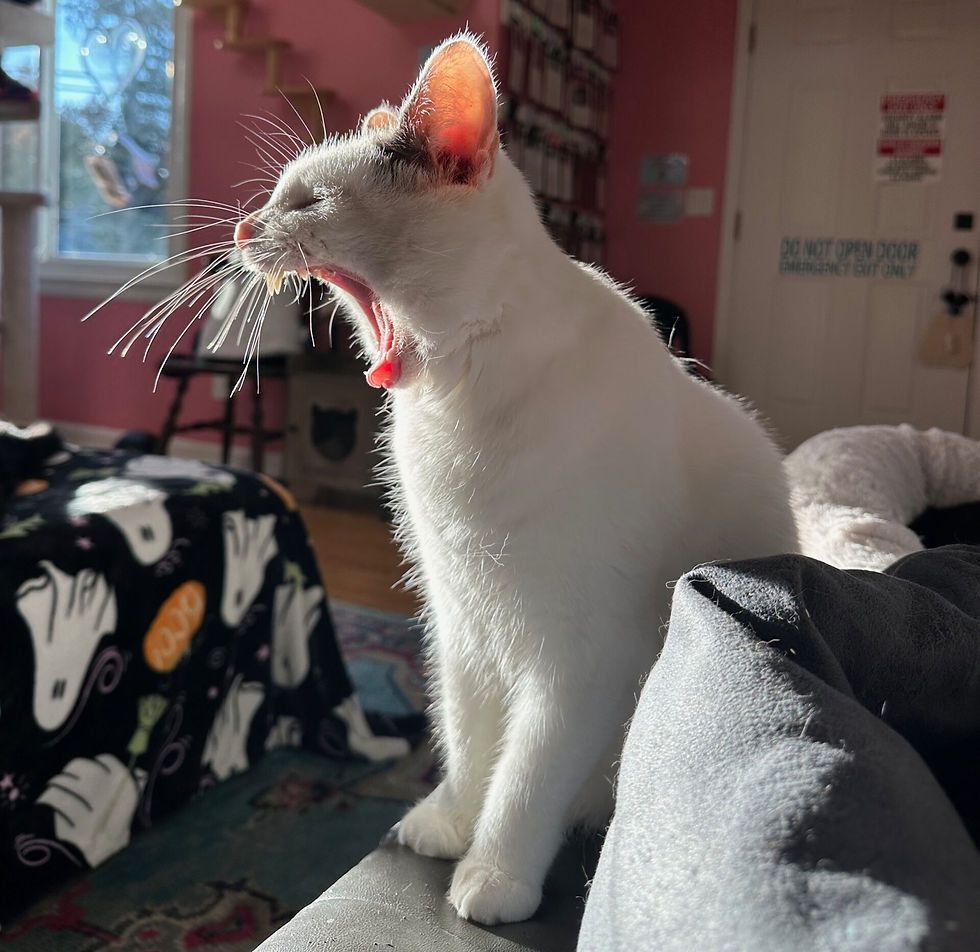
The nap may last ten minutes. It may last an hour. It may include a sudden wake-up, a stretch so long it looks like yoga, and one quick sprint for no reason anyone can prove.
Then the outside world starts to stir.
Voices approach. Footsteps pause near the entrance. Someone laughs softly. A door opens.
The cats know.
It is showtime.
Guests arrive and the cats go to work
When guests begin arriving, the cottage changes. It is no longer only a place to nap. It becomes a stage, a parlor, a playground, and a negotiation room.
The cats have many roles to fill.
One becomes the official greeter, weaving between ankles and accepting compliments like royalty receiving tribute.
One chooses the highest perch and observes the crowd. This cat is not unfriendly. This cat is curating interest. If someone passes the vibe check, they may be granted a slow blink.
One goes straight for the toy wand. This cat has been waiting all morning to demonstrate athletic excellence. The leaps are stunning. The landings are not always graceful. The confidence remains untouched.
One cat finds the quietest guest in the room and climbs into their lap without asking. This is both a gift and a legal contract. The guest may not move until released.
The work of entertaining humans is constant. Cats must rub against legs, chase feathers, ignore expensive toys, attack a cardboard box, supervise shoelaces, and sit just out of reach until someone gives up. Then, naturally, they come closer.
There are important decisions to make every few minutes.
Should the toy mouse be chased, carried, hidden, or dropped in a water bowl?
Should the empty paper bag be entered normally, or attacked from the side?
Should the guest pet for ten seconds, twenty seconds, or until the cat gives a warning tail flick?
Should the newly available chair be claimed before a human sits there?
The answer is usually yes.
For visitors, this is charming. For the cats, this is a full schedule. They must read body language, choose their favorite people, dodge too much excitement, and make sure the room never gets too predictable.
A guest might come in hoping to meet a certain cat, only to be selected by another one entirely. That is part of the magic. Cats are not vending machines for affection. They choose. They change their minds. They make the rules, revise the rules, and then enforce rules no one else knew existed.
A Catnip Cottage cat may spend the morning playing wildly, then suddenly decide they are done. They will retreat to a perch, tuck their paws under them, and look down upon the room with the calm expression of someone who has just completed a very demanding office job.
Except the office job involved batting a felt fish under a couch.
Midafternoon is for siestas and soft snuggles
By midafternoon, the cottage grows quieter. The early excitement has passed. The cats have eaten, stretched, greeted, played, judged, forgiven, and judged again.
Now comes one of the best times of day.
The siesta shift.
This is when the energy softens. The cats settle into their favorite spots. Sunbeams move across the floor. Toys lie abandoned where the last great hunt ended. A few cats curl into perfect circles. Others sprawl on their backs in total comfort, paws limp, bellies exposed but not necessarily available.
For humans who want gentle snuggle time, this can be the sweetest part of the day. The cats are calmer. The room is slower. Nobody is trying to prove they can jump three feet in the air to catch a feather.
A sleepy cat may climb into a lap and stay awhile. Another may press against a shoulder. One may tuck beside a visitor and purr with that deep, steady rumble that makes the whole world feel more manageable.
The best approach during quiet time is simple.
Sit low and stay relaxed.
Let the cats come over when they choose.
Offer a hand to sniff before petting.
Keep voices soft.
Enjoy the honor when a cat decides your lap is the correct lap.
Midafternoon snuggles are not flashy. They are better than flashy. They are warm, slow, and honest.
A cat who was too busy to be cuddly in the morning may suddenly become a little shadow. A bold player may become a biscuit-making machine. A shy cat may inch closer, one careful paw at a time, until they are near enough to share space.
That is the thing about cats. Their affection often arrives quietly. It does not always announce itself. Sometimes it looks like a lean against your leg, a soft blink from across the room, or the decision to nap just close enough that you know you have been accepted.

Of course, not every cat naps politely. Someone may still get the zoomies. Someone may decide quiet time is the ideal moment to dig all the toys out of the basket. Someone may wake from a deep sleep, announce a single loud meow, and return to sleep without explanation.
This is normal cottage behavior.
Evening brings fresh bowls and clean beds
As the day winds down, the humans return to the familiar rhythm of care. Evening cleaning begins. Bowls are washed or refreshed. Fresh food and water appear again. Litter boxes receive attention. Blankets are shaken out, folded, replaced, and briefly admired before a cat sits on them.
The cats know this routine too.
Some gather near the feeding area with great enthusiasm. Others pretend not to care, then hurry over the moment food arrives. One cat may act as if they have discovered the meal by accident, as though they were not watching every movement from the moment the container opened.
Dinner at the cottage has its own music. The soft clink of bowls. The rustle of bedding. The tiny crunch of kibble. The satisfied silence of cats eating.
After dinner, the room gets reset for the night. Toys find their way back to baskets. Pillows are placed where pillows belong. Blankets are smoothed. Beds are made cozy. The cottage starts to look calm again.
This phase matters. Cats thrive on routine. They notice patterns, even when they act too cool to admit it. Morning greetings, meals, play, quiet time, evening care, and bedtime all help shape a day that feels safe and familiar.
The humans may say goodnight to each cat. Some cats accept this with grace. Some lift their heads halfway, then decide that is enough effort. Some follow the humans around as if they are helping with chores, which mostly means standing exactly where the next task needs to happen.
By late evening, the cats are tucked in.
Lights lower. The room settles. Everyone appears peaceful. Little bodies curl into soft beds. A cat stretches across a pillow. Another disappears into a cozy hideaway. Someone gives a final slow blink.
The scene is pure sweetness.
It is also deeply misleading.
Nighttime belongs to kitty chaos
Once the humans leave and the cottage grows still, the cats begin the part of the schedule they prefer not to discuss.
Night.
No one can say exactly when the first toy is launched across the floor. No one knows who starts it. The cats are not talking.
But by morning, there are clues.
A fish toy appears in a bed where no fish toy had been before. A blanket lies halfway across the room. Pillows have been shoved to the floor. A tunnel has rotated into a new location. Every single toy, including the ones that were definitely in a basket the night before, is suddenly scattered across the room like evidence from a tiny, furry festival.
And the cats?
They are asleep.
Or pretending to be.
They blink up at the morning crew with calm faces. “Chaos? Here? Couldn’t be us.”
One cat yawns delicately from a pile of displaced blankets. Another stretches beside an overturned pillow with the expression of someone shocked by the disorder. A third sits beside twelve toys and looks personally offended that anyone might ask questions.
This is perhaps the greatest performance of the day.
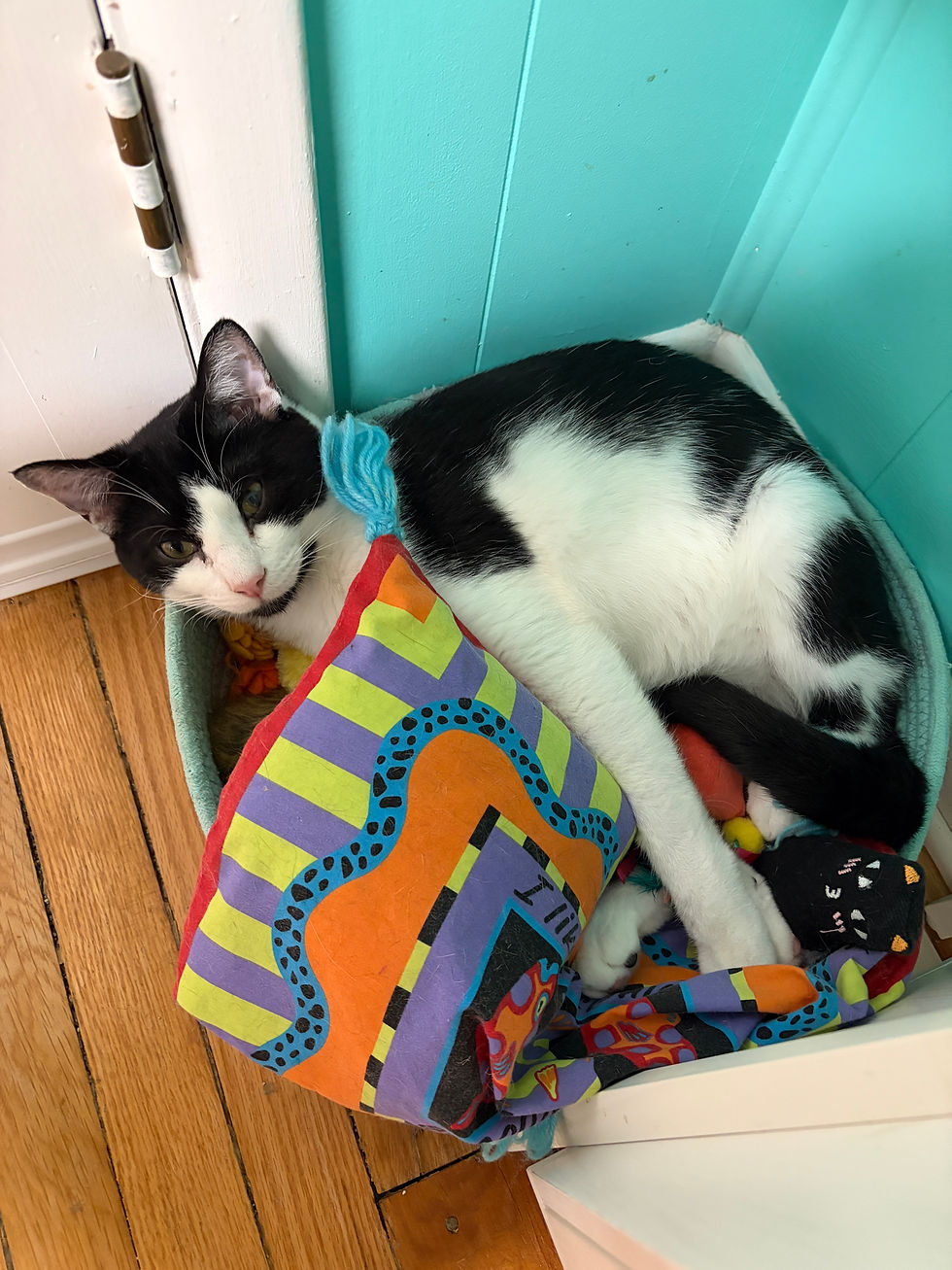
The truth is, nighttime play is part of being a cat. Cats often get bursts of energy when the world is quiet. They chase, pounce, wrestle, explore, and invent games that humans will never fully understand.
A crinkle ball becomes prey. A blanket edge becomes an enemy. A pillow becomes a mountain. A toy mouse becomes a trophy that must be carried from one side of the room to the other with great ceremony.
Then, sometime before dawn, the cats agree without speaking to resume their innocent positions.
They tuck their paws under their chests. They curl into beds. They look soft, sleepy, and completely blameless.
When the door opens again and the morning crew steps inside, the whole cycle begins.
Every day is a little different
No two days at Catnip Cottage are exactly the same. One day may bring lap naps and gentle purrs. Another may bring toy-chasing contests and dramatic window watching. A shy cat may surprise everyone by coming forward for pets. A confident cat may spend the afternoon hidden in a blanket cave because that is what felt right.
That is the charm of it.
The structure stays familiar, but the cats add their own edits. Morning greetings may be bold or sleepy. Guest time may be playful or peaceful. Snuggle hour may involve one cat, three cats, or one cat who takes up the space of three. Evening may be calm, or it may include one last burst of zoomies before lights out.
A day in the life of a Catnip Cottage cat is full of care, comfort, routine, and just the right amount of mischief.
The humans clean, feed, refresh, and tuck everyone in. The guests bring play and affection. The cats provide the magic: the head bumps, the purrs, the ridiculous poses, the sudden sprints, the quiet trust, and the morning-after innocence that fools absolutely no one.
By the time another day begins, the pillows will be back on the beds, the toys will be gathered, the bowls will be fresh, and the cats will be ready once more.
After all, someone has to supervise the cottage. And if a few blankets end up on the floor overnight, well, that is simply part of the job.
Comments